Wednesday, 23 May 2018

Rashtriya Gram Swaraj Abhiyan

Source All India radio



The Cabinet Committee on Economic Affairs chaired by the Prime Minister, Shri Narendra Modi gave its approval for restructured Centrally Sponsored Scheme of Rashtriya Gram Swaraj Abhiyan (RGSA).   
Influence: Mahatma Gandhi always highlighted the importance of villages and spoke about ‘Gram Swaraj’
Objective:
To make rural local bodies
  • Self-sustainable
  • Financially stable
  • More efficient
Address critical gaps that hinder the success of panchayats by
  • Enhancing their capacities and effectiveness
  • Promoting devolution of powers and responsibilities
Presence: In all States and Union territories; will also include institutions of rural local government in non-Part IX areas, where panchayats do not exist.
Centre-State Responsibility:
  • The sharing ratio for the state components will be 60:40 barring the Northeast and hilly states where it will be 90:10.
  • For UTs, the central share will be 100 per cent.
  • The Central component includes national level activities such as ‘National Plan of Technical Assistance’, ‘Mission Mode project on e-Panchayat’, ‘Incentivisation of Panchayats’; while the State component includes ‘Capacity Building of Panchayati Raj Institutions (PRIs)’.
  • The State Governments will formulate the Annual Action Plans for seeking assistance from the Central Government.
Nature of the Scheme
  • The key principles of SDGs, i.e. leaving no one behind, reaching the farthest first and universal coverage, along with gender equality will be embedded in the design of all capacity building interventions including trainings, training modules and materials.
  • Priority will be given to subjects of national importance that affects the excluded groups the most, e.g. poverty, primary health services, nutrition, immunization, sanitation, education, water conservation, digital transactions etc.
  • The scheme is designed keeping in view programmatic convergence with Mission Antyodaya GPs and 115 Aspirational districtsas identified by NITI Aayog. As Panchayats have representation of Schedule Castes, Schedule Tribes and women, and are institutions closest to the grass­roots, strengthening Panchayats will promote equity and inclusiveness, along with Social Justiceand economic development of the community.
Impact:
  • Help more than 2.55 lakh Panchayati Raj Institutions (PRIs) to develop governance capabilities to deliver on SDGs through inclusive local governance with focus on optimum utilisation of available resources.
  • Increased use of e-governance by PRIs will help achieve improved service delivery and transparency.
  • Strengthen Gram Sabhas to function as effective institutions with social inclusion of citizens particularly the vulnerable groups
  • Establish the institutional structure for capacity building of PRIs at the national, state and district level with adequate human resources and infrastructure.
  • Panchayats will progressively be strengthened through incentivisation on the basis of nationally important criteria which will encourage competitive spirit among them.
Conclusion:
Individual citizens and village level institutions in rural India have the most at stake in the development of their communities. Good Rural Governance programs empower these communities by engaging citizens and members of village level institutions to actively participate in their own development. Rashtriya Gram Swaraj Abhyaan seeks to include and expand developmental experience at the grassroots level.
https://www.facebook.com/Aovious1
Print Friendly and PDF

Saturday, 19 May 2018

All about agriculture in J&K with PDF


Jammu & Kashmir State is predominantly an agrarian economy with about 80% of its population engaged in agriculture and allied sectors. 
The agro-climatic diversity of the State varying from sub-tropical in Jammu, temperate in Kashmir and cold arid in Ladakh, makes it ideal for varied cultivation. 
The goal before the Agriculture Production Department is to enhance the income of farmers and to generate employment in agriculture and allied sectors. The strategy adopted for this purpose is to increase production and productivity of the crops and to enable farmers to diversify their crop production so as to take advantage of market opportunities. he main role of the department is to help farmers to adopt better technology and to facilitate establishment of infrastructure for farm production and marketing. New avenues are being explored for investment. The department is also promoting diversification of agricultural crops to motivate farmers to move towards low volume-high value crops like vegetables, medicinal plants and niche products like saffron, rajmash, zeera, mushrooms etc.  Agriculture has, after a very long time, occupied centre stage in the economic and administrative discourse in the State at a time when all seemed lost due to the dwindling interest of the younger generation in agriculture activities. The concerted efforts of the Agriculture Production Department have triggered a new hope among the people, which promises profitability and dignity in the agriculture as an occupation

For full article  download Below pdf file 

PDF click here 

 Follow us at facebook https://www.facebook.com/Aovious1


 Print Friendly and PDF

Tuesday, 15 May 2018

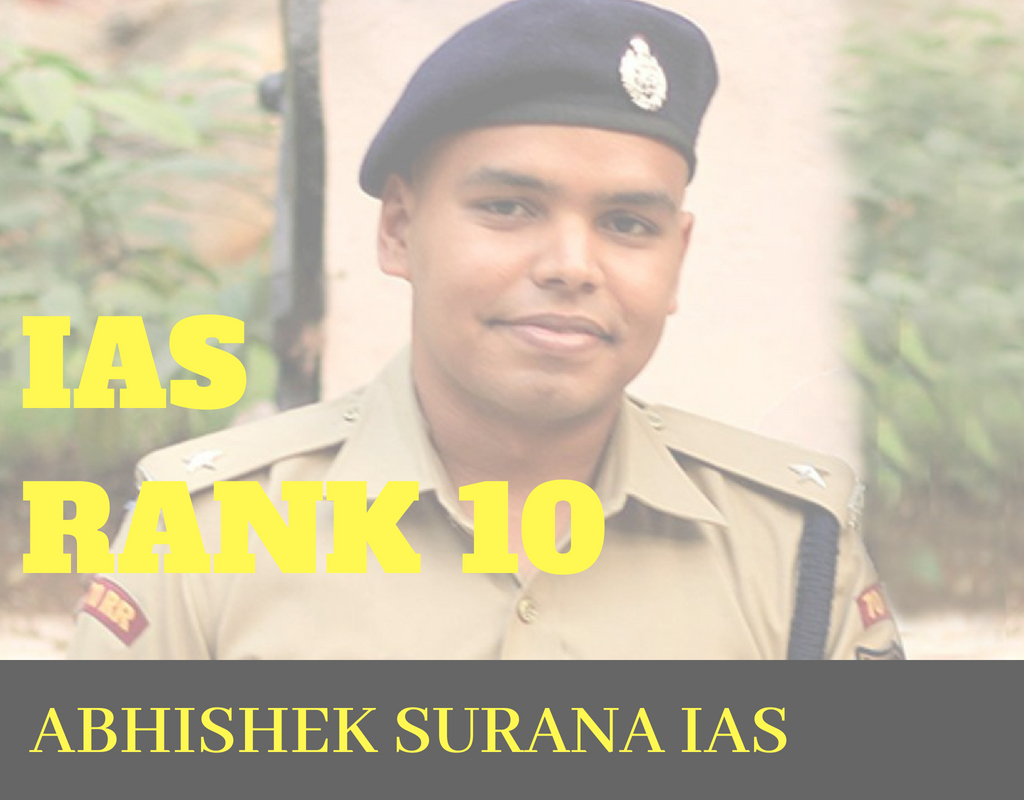
Essay Paper Strategy and Resources – by Abhishesk Surana Rank 10 CSE 2017


It is one of THE Most rewarding paper in the Mains Exam.
When I first started preparing I use to wonder how would it be possible to write 1000-1200 words on two topics in 3 hours. Where would I get the content from? How would I frame the argument? My friends who had appeared in CSE before dismissed these doubts as trivial saying that it is one of the easiest paper in CSE which require least preparation compared to the marks you get.
In the hindsight I would say they were partly correct.
For any UPSC aspirant content is not an issue at all. What one study in GS is actually fodder for essay. The challenge here is to recall those ideas in first 20 minutes and frame a coherent and sensible argument. And this demands practice.But this can only take you so far. Once you get a hang of writing 1000 words on a topic you should start working on structuring your content, getting innovative ideas into your essay, giving a broad perspective to a topic, using quotes and anecdotes.
My strategy
  • I used to choose a topic which has lots of dimensions to it. Usually this was the topic on which most people were going to write a essay. While there are advocates of choosing a non mainstream topic, it has inherent risk of backfiring. So I would suggest stick to the popular topic.
  • Then I use to list down the random keywords and ideas that use to come to my mind as i start thinking on the topic.
  • After 5 minutes I will write the questions that I want to answer in my essay- 5/6 of them – this gives structure to your content
  • Now for next 10 mins I use to connect my ideas with the questions. I would try to recall any quotes, data points, anecdotes, movies, books, authors, philosophers, leaders that I could relate with the topic
  • In this time I also use to frame a coherent argument along with a decent Introduction and conclusion
  • Introduction
    • Hook – something catchy – a quote, data point, short story which catches attention
    • thesis – Brief outline of your argument
    • Background – you can give a historical perspective of the issue or define the topic
  • Use of rhetorical questions – at times as they help in giving a structure to the essay.
  • Use of headings – not more than 3 in an essay, Your essay should look like a editorial in the Hindu
  • Use of diagrams – I am not in favour. An essay is test of your language and writing skills in my opinion.
  • Dimensions
    • SPECLIH – Social (Education, Health, Women, Children, other vulnerable groups), Political, Philosophy, Environment, Economic, Cultural (beliefs, attitude, values, ethics ), Linguistic/Local, International, Humanistic, history, Governance, Administration
  • Stakeholders to Analyse from different perspectives
    • Individual, Family, Community , Society, Nation, Humanity
  • Conclusion
    • Suggestion, Reiterate your core argument, Positive, Reserve best for here
    • I would try to use parallelism if i can. For Ex – Read MLK I have a dream speech
Few More Tips
  • Choose a topic where you can argue in a reasonable and balanced manner
  • Find the spirit of the topic
  • Argument should be coherent.
  • Present opposite side
  • Introductory Hook, Thesis, Background – should be positive unlike “the world is in chaos, or pollution will kill us”
  • Avoid using contraction – it’s , should’ve etc
  • Use as less numbers as possible. 2/3 should be used as two thirds
  • Bring some originality – give your opinion,
  • Substantiate each argument with a “why?”
  • You can use an anecdote from a movie or a book. The more contemporary it is the better it would be
DON’T FORGET
  • WHAT IS BEING TESTED – YOUR VALUE SYSTEM, YOUR CAPACITY TO ARGUE, YOUR PERSONALITY. YOUR KNOWLEDGE IS NOT BEING TESTED
  • THERE IS NO RIGHT AND WRONG SIDE IF YOU CAN ARGUE COHERENTLY
  • NEVER GIVE SHALLOW ARGUMENT.
  • QUANTITY DOES NOT MATTER. IF YOU CAN ARGUE IN CONCISE MANNER, THAT IS EVEN BETTER
2 Essay Approach
  • 80 min for each essay then. (60 min for writing + 20 min for thinking)
  • First 10 min choose the topic.
  • Last 10 min to revise.
  • 8-9 pages for each essay


  • Certain keywords which can be used in essay
  • Essay notes
    • There are a set of openings and ending which you can use in various essays
    • for each topic I’ve divided it into
      • Data
      • Issues
      • Importance
      • Suggestion
      • Quotes
    • Since most of the topics are covered in GS, the notes standalone are not sufficient
    • There are ample number of references from movies, philospohers, books etc
  • Few articles/speeches as food for thought
  • Shabbir sir class notes  – Vajiram
    • A big credit goes to him. I was able to get a decent score in essay for 3 continuous years following his template
Essay workbook I used – courtesy GS Score

I would say that your efforts should be in the direction to get a above average score and not the highest marks. At times, many have done miserably in this paper by experimenting with topic, structure, language or content. You should adopt a risk free approach and stick to the conventional wisdom.
My best wishes.
-Abhishek
PS – My essay marks 126(2014), 136(2015), 148(2016) and 136(2017)

Print Friendly and PDF

Tuesday, 8 May 2018

Protection of Human Rights (Amendments) Bill, 2018


Cabinet approves the Protection of Human Rights (Amendments) Bill, 2018

(Relevant for GS prelims, GS Mains Paper II)  


The Union Cabinet has given its approval to the Protection of Human Rights (Amendments) Bill, 2018 for better protection and promotion of human rights in the country.  

Salient Features:


 1. It proposes to include National Commission for Protection of Child Rights as deemed Member of the Commission;
 2. It proposes to add a woman Member in the composition of the Commission; 
3. It proposes to enlarge the scope of eligibility and scope of selection of Chairperson, National Human Rights Commission as well as the State Human Rights Commission; and 
4. It proposes to incorporate a mechanism to look after the cases of human rights violation in the Union Territories. 
5. It proposes to amend the term of office of Chairperson and Members of National Human Rights Commission and State Human Rights Commission to make it in consonance with the terms of Chairperson and Members of other Commissions.  

Benefits

The Amendment will strengthen the Human Rights Institutions of India further for effective discharge of their mandates, roles and responsibilities. Moreover, the amended Act will be in perfect sync with the agreed global standards and benchmarks towards ensuring the rights relating to life, liberty, equality and dignity of the individual in the country.  

National Human Rights Commission (NHRC)  

It is an autonomous public body constituted in year 1993 under Protection of Human Rights Act. It is responsible for the protection and promotion of human rights, defined by the Act as rights relating to life, liberty, equality, and dignity of the individual guaranteed by the constitution or embodied in the International Covenants. 

  Composition of NHRC 


The NHRC consists of:
  • A Chairperson, should be retired Chief Justice of India though GoI mulling appointment of retired SC Judges as chairperson )
  • One member who is, or has been, a Judge of the Supreme Court of India  
• One member who is, or has been, the Chief Justice of a High Court  
• Two members to be appointed from among persons having knowledge of, or practical experience in, matters relating to human rights 
 • In addition, the Chairpersons of four National Commissions Scheduled Castes, Scheduled Tribes, Women and Minorities) serve as ex officio members.  
The sitting Judge of the Supreme Court or sitting Chief Justice of any High Court can be appointed only after the consultation with the Chief Justice of Supreme Court.  Functions of Commission

  1. Enquire suo moto or on a petition into a complaint of violation of human rights. 
2. Intervene in any proceedings involving violation of human rights pending before court but with approval of court. 
3. Review the safeguards provided by constitution or any law for the protection of human rights and recommend measures for their effective implementation.
 4. Undertake and promote research in the field of human rights.   

NHRC reports to the President and Governor on matters relating to Union and State, respectively. President and Governor cause presentation of the report to respective legislatures along with ATR (Action Taken Report) by respective Council of Ministers.  

https://www.facebook.com/Aovious1


 Print Friendly and PDF

Saturday, 5 May 2018

India China Wuhan summit 2018


two day informal summit between Prime Minister Narendra Modi and Chinese President Xi Jinping took place in the central Chinese city of Wuhan in the last week of April 2018.
Background:
  • Since the Doklam Standoff,there have been no high level meetings between India and China.
  • An informal summit was thus called to improve bilateral tiesand to prevent another standoff at the border.
  • The summit had no fixed agenda so that a wide range of issues could be covered.
Note:
  • In December 2017, the two Foreign Ministers met in New Delhi followed by a meeting between China’s then state councilor Yang Jiechi and Mr. Modi’s National Security Adviser, Ajit Doval.
  • Foreign Secretary Vijay Gokhale visited China in February 2018
  • Foreign Minister Sushma Swaraj and Defence Minister Nirmala Sitharaman went to China for Shanghai Cooperation Organisation (SCO) meetings.
Significance of the summit:
  • The very decision by theChinese President Xi Jinping to spend two days in the cityfor talks with Prime Minister Narendra Modi sends out amessage to Chinese business and political classes that ties with India have the highest approval.
  • The summit has shown that despite bilateral and geopolitical differences, India and China can resolve differences peacefully and through prolonged dialogue.
  • The summit’s outcomes may have been limited but are very valuable to stabilise the relationship.
  • It has underlined the necessity of an entente cordialebetween the two countries, which have becomeincreasingly distrustful of each other.
Major Takeaways:
  • Both the countries have decided to “issue strategic guidance to their militaries to strengthen communication”  in order to build trust and mutual understanding and enhance predictability and effectiveness in the management of border affairs, essentially to avoid another Doklam-like confrontation
  • They have addressed measures to balance the ballooning trade deficit of about $52 billion (of about $84 billion bilateral trade), mostly by encouraging agricultural and pharmaceutical exports to China
  • Both the countries discussed ajoint project in Afghanistan.This proposed joint economic project in Afghanistan could beinstrumental in mitigating the trust deficit between the two sides.
  • They attempted to reduce the heat over unresolved issues and so-called “irritants” in the relationship, such as China’s block on India’s NSG membership bid or the UN’s terror designation for Pakistan-based groups, and India’s opposition to the Belt and Road Initiative or its use of the Tibet issue by strengthening the existing mechanisms of dialogue.
Positive changes after the summit:
  • statement was made by the Chinese vice foreign minister that China will not push India to join its Belt and Road Initiative (BRI) to connect countries Asia, Europe and Africa amid India’s persistent reservations on Xi’s mega project on the grounds of China–Pakistan Economic Corridor (CPEC) and financing patterns.
  • Chinese business and industrial houses could now choose India as destination for greenfield projects and not just mergers and acquisitions.
Way Forward:
  • The Wuhan summit has recommitted India and China to managing bilateral relations in a manner that creates the conditions for the “Asian Century
  • If China and India can cooperate in Afghanistan, they can certainly do so in other parts of the neighbourhood.
  • Mr. Modi and Mr. Xi, both withstrong domestic political standing, would be able to reach an agreement, and use it to further consolidate their domestic appeal,
  • The “informal summit” is being perceived as a big positive for Chinese companies investing in India as the two governments attempt to reset bilateral ties. This would give a major boost to the Make in India Campaign.


Print Friendly and PDF

Sunday, 29 April 2018

CHOGM: India’s Pivotal Role


In News: Prime Minister Narendra Modi, the Commonwealth Heads of Government Meeting (CHOGM), launched his Commonwealth outreach through a series of meetings with leaders of Indian Ocean Region, African, Caribbean and Pacific Islands.
  • Plans to put India in the leadership position in the grouping where China is absent – part of India’s continuous outreach as key player in the Indian Ocean Region and Africa amid China’s inroads. It would help India strengthen its presence in areas where China is increasingly active, for example in Africa where India is building a development role, and in the Indian Ocean and elsewhere such as the Pacific and Caribbean where it could strengthen its relationship with the Commonwealth small island states.
  • India’s focus at the meet is on common, fairer, secure, sustainable and prosperous future
  • Announced a slew of funds for development and capacity building projects for countries in the grouping –
    • Raising to £2 billion from £1 billion in the area of Commonwealth Fund for Technical Cooperation
    • Opening Commonwealth sub fund in India-UN fund as grants of $ 50 million for 5years
    • Enhanced contribution for Commonwealth small state offices in New York and Geneva
    • Training for cricket for 30 girls and 30 boys by BCCI.
India’s pivotal role at CHOGM – An Analysis
Opportunity for India to engage with other countries: Potential of CHOGM has not been realised yet – there is great value in this association. There exists great uncertainty and unpredictability on the global level – with China adopting a leading role. India is in a better position to shape policies today.
Relevance of grouping: If it has to survive, it has to reorganise itself. Britain has realised that India needs to be brought in, in a much bigger way. At a time, when India is expanding its global footprint, the argument of CHOGM being a relic of the past, does not hold true. India should take this opportunity up; and re-look at how India can engage with other players.
Britain’s expectations:
  • Platform where its voice can be heard loud and clear
  • As India occupies a significant position, Britain is very keen to engage India as its special partner. Britain is India’s gateway to Europe and if the ties are severed (post BREXIT), India’s bilateral relations with Europe might suffer, which India wants to persevere and promote.
Expectations from India:
  • Reimagine and shape policies for CHOGM
  • Opportunity of promoting our views that affect our interests at the international level
  • India should concentrate on developmental activities in the LDCs and engage with them as it will be logistically easier
The Way Forward – Seize the Opportunity
India must not squander the opportunity presented by the renewed interest in the Commonwealth. India should take active steps to –
  • Bridge the gap between developing and developed members of the forum
  • India should provide the leadership that will make the Commonwealth an effective multilateral forum – platform to reach out to wide variety of countries at one go for further collaboration
  • Give shape to a model of international co-operation and partnership distinct from that of China – decide and shape the rules of the game; removes one obstacle to meaningful discussions
  • Leverage partner countries’ technology and financial position for trade and schemes like Make in India, Smart Cities, etc.

Commonwealth Facts:


Founded: 1949
Head of the Commonwealth: Queen Elizabeth
Member-states: 53 (31 small states, many of them islands)
Population: 2.4 billion (60% under the age of 30)
Smallest country: Tuvalu (11,000); largest: India (1.3 billion)
GDP: $13 trillion by 2021
Commonwealth secretariat: Marlborough House, London
Since the London Declaration of 1949, which established the modern Commonwealth, India has held a pivotal position in this voluntary association of 54 independent sovereign states. It was India’s decision in 1948, as a newly independent Republic, to remain in the Commonwealth which influenced other Asian and African countries to join the organisation and which opened the era of the modern Commonwealth.
Since then, it was firmly established that joining the Commonwealth no longer necessarily involved continued allegiance to the British Crown. At the same time the word ‘British’ was dropped from the association’s title to reflect the Commonwealth’s changing character.


Print Friendly and PDF

Thursday, 26 April 2018

Protection of Human right (ammendment) Bill 2018 ✅


The Union Cabinet chaired by Prime Minister Shri Narendra Modi has given its approval to the Protection of Human Rights (Amendments) Bill, 2018 for better protection and promotion of human rights in the country.
Objectives:
  • Strengthen the Human Rights Institutions of India further for effective discharge of their mandates, roles and responsibilities
  • Will be in perfect sync with the agreed global standards and benchmarks towards ensuring the rights relating to life, liberty, equality and dignity of the individual in the country.
Salient Features: It proposes to
  • Include “National Commission for Protection of Child Rights” as deemed Member of the Commission – a welcome move as the child rights will be focussed on
  • Add a woman Member in the composition of the Commission;
  • Enlarge the scope of eligibility and scope of selection of Chairperson, National Human Rights Commission as well as the State Human Rights Commission; and
  • Incorporate a mechanism to look after the cases of human rights violation in the Union Territories.
  • Amend the term of office of Chairperson and Members of National Human Rights Commission and State Human Rights Commission to make it in consonance with the terms of Chairperson and Members of other Commissions.
The Way Forward:
The amendment to the Protection of Human Rights Act, 1993 will make National Human Rights Commission (NHRC) and State Human Rights Commission (SHRC) more compliant with the Paris Principle concerning its autonomy, independence, pluralism and wide-ranging functions in order to effectively protect and promote human rights.
Although, the fine print and detailing is yet to come about, broadly, the intent and objective is reassuring. The commitment and wide vision of the government is very critical. National Human Rights Commission must live up to its mandate in letter and spirit.
https://www.facebook.com/Aovious1
Print Friendly and PDF

National human right commission – Powers and Functions


NHRC

What is the NHRC?

The National Human Rights Commission (NHRC) is a statutory body that has been constituted under the provisions of the Protection of Human Rights Act, 1993. (PHRA)
Its function is to protect and promote human rights i.e. rights relating to life, liberty, equality and dignity of the individual guaranteed by the Constitution or embodied in the International Covenants (human rights as defined in PHRA, 1993).

Who are its members?

The NHRC consists of the following members:
  • Chairperson who is a retired Chief Justice of India
  • Two members who are sitting/retired judge of Supreme Court or sitting/retired Chief Justice of a High Court
  • Two members who are persons who have knowledge and expertise in the field of human rights.
  • Chairperson of National Commission for SCs (ex-officio member)
  • Chairperson of National Commission for STs (ex-officio member)
  • Chairperson of National Commission for Women (ex-officio member)
  • Chairperson of National Commission for Minorities (ex-officio member)
The chairman and members are appointed by the President of India on the recommendation of a 6 member committee consisting of the Prime Minister, Speaker of the Lok Sabha, Deputy Chairman of the Rajya Sabha, leaders of opposition in both the houses of parliament and the Union Home Minister.

Why is the NHRC called a toothless tiger?

The Supreme Court of India has recently reiterated NHRC’s own observations that it is a toothless tiger. This was in light of the issue of extrajudicial killings in Manipur. The remark was made due to the following lacunae in its functioning and composition:

Functions

1. The NHRC is a recommendatory body and does not have powers to prosecute a human rights violation on its own or see that its recommendations are carried out. It can only make recommendations for corrective actions and punishments to the executive and judiciary respectively.
2. The NHRC is limited by its ability to investigate human rights violations that have occurred up to a year before and not earlier. A genuine grievance that exists in the earlier time period is thus ignored. This is quite an obstacle in seeking justice in a country as big and diverse both in areal as well as population terms.
3. The NHRC cannot directly investigate alleged human rights violations by the armed forces but can only seek a report from the Government on the matter.
4. The PHRA, 1993 does not extend to the state of Jammu and Kashmir thus ending all responsibility for the NHRC for human rights violation in one of the most disturbed regions in the country.

Functionaries

1. Vacancies in the NHRC and Chairperson of various Commissions that have representations on the NHRC are often not filled for long duration.
2. The PHRA also does not require that the judicial members appointed have a proven track record in human rights.
3. The Global Alliance of National Human Rights Institutions (GANHRI) has observed the lack of women appointed to the NHRC due to the restrictive pool of candidates from the higher judiciary, limiting its ability to tackle gender sensitive issues in an effective manner. Moreover, the vacancies to the NHRC are not suitably advertised.
4. The GANHRI has also noted the involvement of political representatives in the NHRC (Chairperson of National Commission of SCs is also a Member of Parliament). This reduces independence of the NHRC.
5. The appointments to the NHRC are often those of retired bureaucrats, even Chairpersons to National Commissions for SCs/STs/Women and Minorities are often members who have served in the civil service. This has led to the NHRC being regarded as an extension of the Government and not an autonomous agency.
6. The NHRC relies on staff that is on deputation from other Government departments. This staff often lacks sensitivity and expertise in human rights issues leading to poorly investigated cases.

Funds

1. Paucity of funds has led to limited expenditure on spreading human rights literacy and awareness.
2. The lack of funds has also led to poor infrastructural support for investigative purposes.

Government Support

1. Delays in tabling of the Annual Reports of the NHRC before the Parliament by the Government of India. Only those reports that have been tabled before the Parliament are made public. The last such report available is for the year 2011-12. The Government has not formulated its responses to the reports since then. This limits accountability of the Executive and efficacy of the NHRC.
2. India is yet to ratify and sign several key conventions that will increase the accountability of the state and empower the NHRC to address other issues. These include:
• Convention Against Torture (signed in 1997, not ratified)
• Convention on the Protection of Rights of All Migrant Workers (not signed)
• Convention for the Protection of All Persons from Enforced Disappearance (signed in 2007, not ratified)
3. The quality of compliance reports submitted to the NHRC by the state governments is often sub-standard and the submissions are irregular and delayed.

What steps can be taken to empower the NHRC?

The NHRC can be strengthened by taking the following measures:
1. Appointments to the NHRC need to be made from a wider pool of candidates. The recommendations of the GANHRI can be considered to relax the criteria for
appointment of members from the higher judiciary. There is also a need to advertise the vacancies widely and fill them promptly without any delays.
2. The expert members criteria needs clear definition and well-defined benchmarks so as to resolve the allegation that it is a post-retirement security for bureaucrats.
3. Political representatives should be strictly limited in their engagement as members of the NHRC so as to ensure independence.
4. There is a need for the NHRC to constitute and maintain an independent cadre of officials that will be able to develop expertise in human rights violation investigation.
5. The PHRA, 1993 needs to be amended to include mandatory time frame for action taken and response formulation by the Government at the Centre and in the states on NHRC recommendations.
6. The NHRC should be granted contempt powers so as to ensure effective implementation of its recommendations.
7. Human rights violations before the one year time frame can be taken on a case by case basis so as to ensure justice and redressal to all.
8. Ratification of Key conventions and enactment of enabling laws as mentioned in the issues above will help strengthen NHRC’s powers.
9. There is a need for a greater role of NHRC in alleged human rights violations by the armed forces. Independent staff that is sensitive about the right balance between human rights and security will enable the NHRC to fulfil its mandate with regards to the armed forces.
10. The NHRC needs to ensure better co-ordination with civil society organisations
(CSOs) to implement its functions -especially of sourcing complaints as well as human rights literacy.
11. Better infrastructural support in terms of more offices and easier accessibility via ICT so as to register complaints and follow up by the aggrieved.

Conclusion

A Human Rights Commission is an essential bulwark against arbitrary action by State or other agencies in a modern day democracy. It serves as an independent platform to not only limit the exercise of powers by the Government but also to guide it on its approach to rights of humans. Also, the NHRC’s reach is limited and the purpose of human rights defeated if the State HRCs too aren’t reformed so as to enable them to conduct their duties effectively. The definition of human rights changes with transformations in society and polity through time. Today, the challenges to human rights are numerous including those of refugees fleeing from persecution (for e.g. Rohingya) as well as environmental refugees. It is thus crucial that the NHRC function properly so as to secure adherence to human rights so that each human can enjoy the opportunity to grow and realise their maximum potential.

Follow me @fb 

Print Friendly and PDF

BLACK FUNGUS ?

  Explained: What is mucormycosis or ‘black fungus’ in Covid-19 patients, its symptoms and treatment Mucormycosis, a serious fungal infecti...